Downright Joy

Discovering joy in unexpected places – a journey into Down's syndrome, Dyspraxia & Autism


Leave a comment

Circus of Curiosity

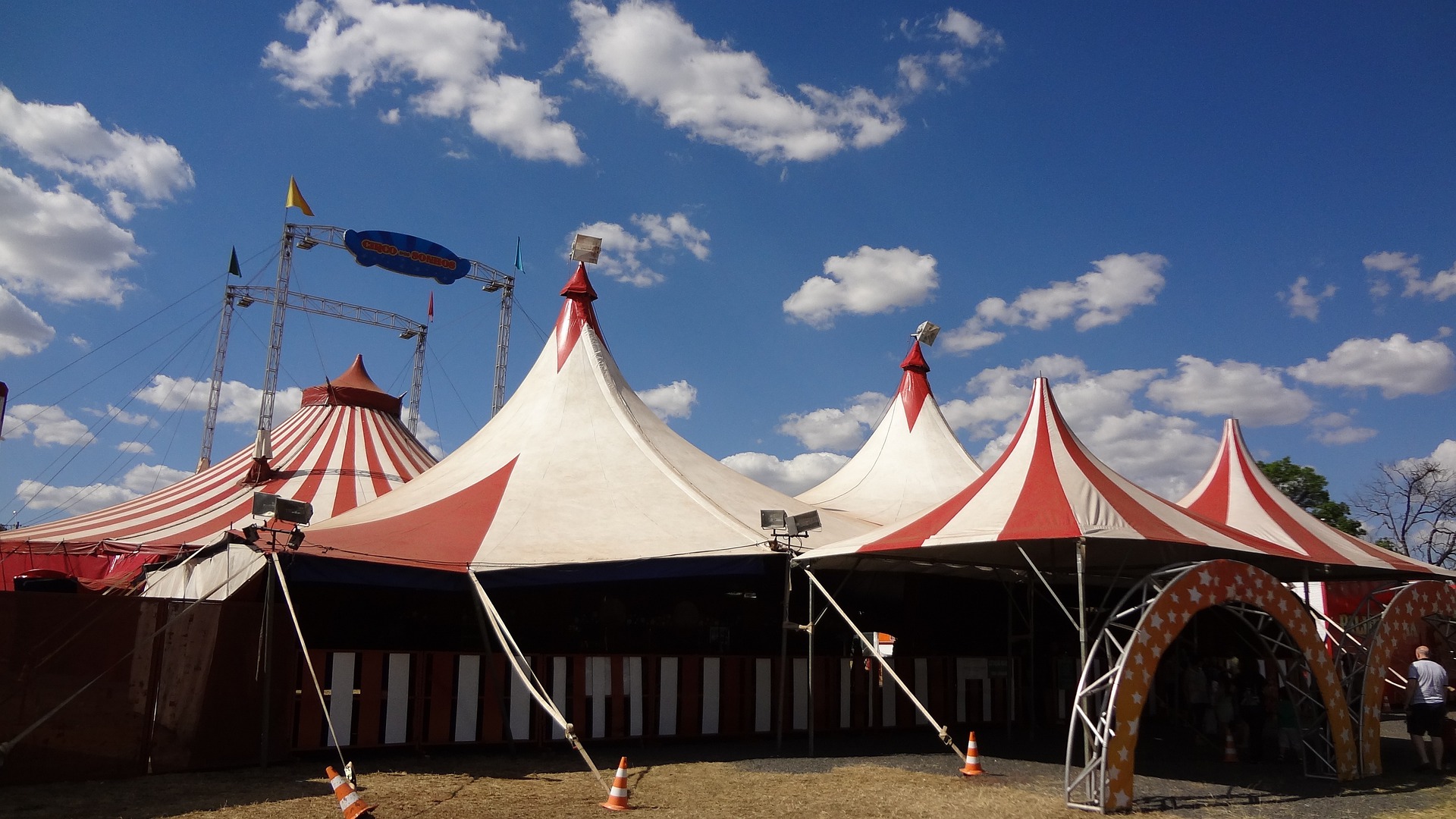
Image by Claudio Kirner from Pixabay

There was no time to prepare you, we were running late. The show was about to begin, we had to take our seats. I pushed you through the heavy canvas opening, into the darkened arena. I’m not sure how much you could see, your eyesight is blurred even with your powerful bifocals. 

What did you see first?

Was it the red velvet carpet laid over the sawdust covered ring? Was it the faces of the audience, eagerly anticipating the start of the show. A show they’d been anticipating for days, weeks or months perhaps. Talking excitedly in the days leading up to their visit about what they would see. I often think that anticipation is the best part of the good and wonderful experiences we have in life. And when I stop to think that you do not live life like this it makes me sad. It shouldn’t. It really shouldn’t.

The tiniest of spiralling particles caught your eye as the spotlight fell. You had no idea what this was, where you were or what was about to happen. 

I knew what to expect. At least, I thought I did. Yet, somehow, you knew how to anticipate something you did not understand. You picked up on the atmosphere. You understood you were somewhere new, somewhere exciting, somewhere different. 

You were not afraid. You were not alone, of course. I was by your side, my eyes were talking to you over the sound of the band that had struck up loudly; reassuring you, letting you see that this new experience was a good one. I held your ear defenders in case you needed them, but you pushed my hand away. 

Curiosity was your ticket to the circus. You were born with a lifetime membership.

And unlike most people, you have never learnt how to live your life without it. 

Mexican music filled the tent and your curiosity took you right into the heart of the Mariachi band.  There you were, in the midst of the violinists, trumpeters, guitarists, vihuela and accordion players, though you never left your wheelchair.

Curiosity made you listen and led you straight into a dance.

You did not dance as though no one was watching, for it would not matter to you what others think. You danced anyway.

Curiosity said this was what you should do, so you did it. Curiosity called you, moved you, as it always does. 

Your ticket to the Circus was the same price as everyone else’s, though you entered via a different doorway and were given a different ringside seat to the rest of the audience. And I’m thankful for the Front of House Team who went out of their way to welcome you to the Circus. They sought you out even from a distance as I wheeled you across the field; not to turn you away but to honour you and make you feel welcomed. 

I have a feeling that those who live their lives in the Circus are born with the same ticket as you. They know that curiosity is a sacred thing.

You saw the same acrobats perform as I did; you saw trapeze artists, jugglers, clowns, musicians, dancers, actors as they told us a story. A story of triumph and joy, formed over years of practice, of falls, of knocks, of getting it wrong, of picking themselves up and starting again. Of determination, of commitment, of blood, sweat and tears, of silliness and joy, of community, of travelling to unknown destinations and pitching their tents in strange places, of wondering at times if they are going to make it. Of an uncertain but exhilarating future. 

We went to the Circus with hundreds of others last week, yet I believe you saw more, experienced more and took more from it than anyone else in that tent that day.

Years ago I was told by well meaning people that it would be kinder for you and for me if you were not born; only because you have Down’s syndrome. They did not know that bolted onto your extra Chromosome was a Golden Ticket of Curiosity with a ringside seat. 

And I’m convinced that you still have the best view.

Photo by Alison Morley


2 Comments

Lemons and Pomegranates

I recently took time out from caring for my disabled child who has Down’s syndrome and took a trip to Italy to visit family I had not seen for a very long time.

It was also an opportunity to spend more time with my eldest child, and introduce her to a whole new cultural experience as well as meet some of our family for the first time. For one entire, exhilarating week, we wandered the cobbled streets of Sorrento, savouring the sights and the sounds of this beautiful coastal town in the Bay of Naples. 

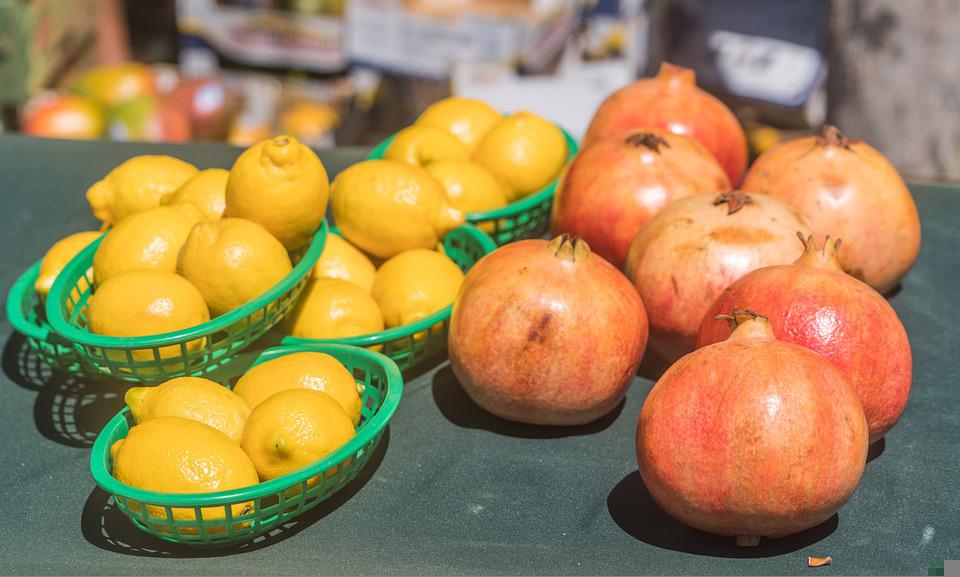
Lemon trees lined our pathways, Orange trees also. In the narrow back streets, shops and bars jostled for space and competed for customers, their baskets filled with ruby red pomegranates and lemons the size of grapefruits. Leather goods spilled out of doorways giving off an intoxicating air of ‘We are Quality and we know it.

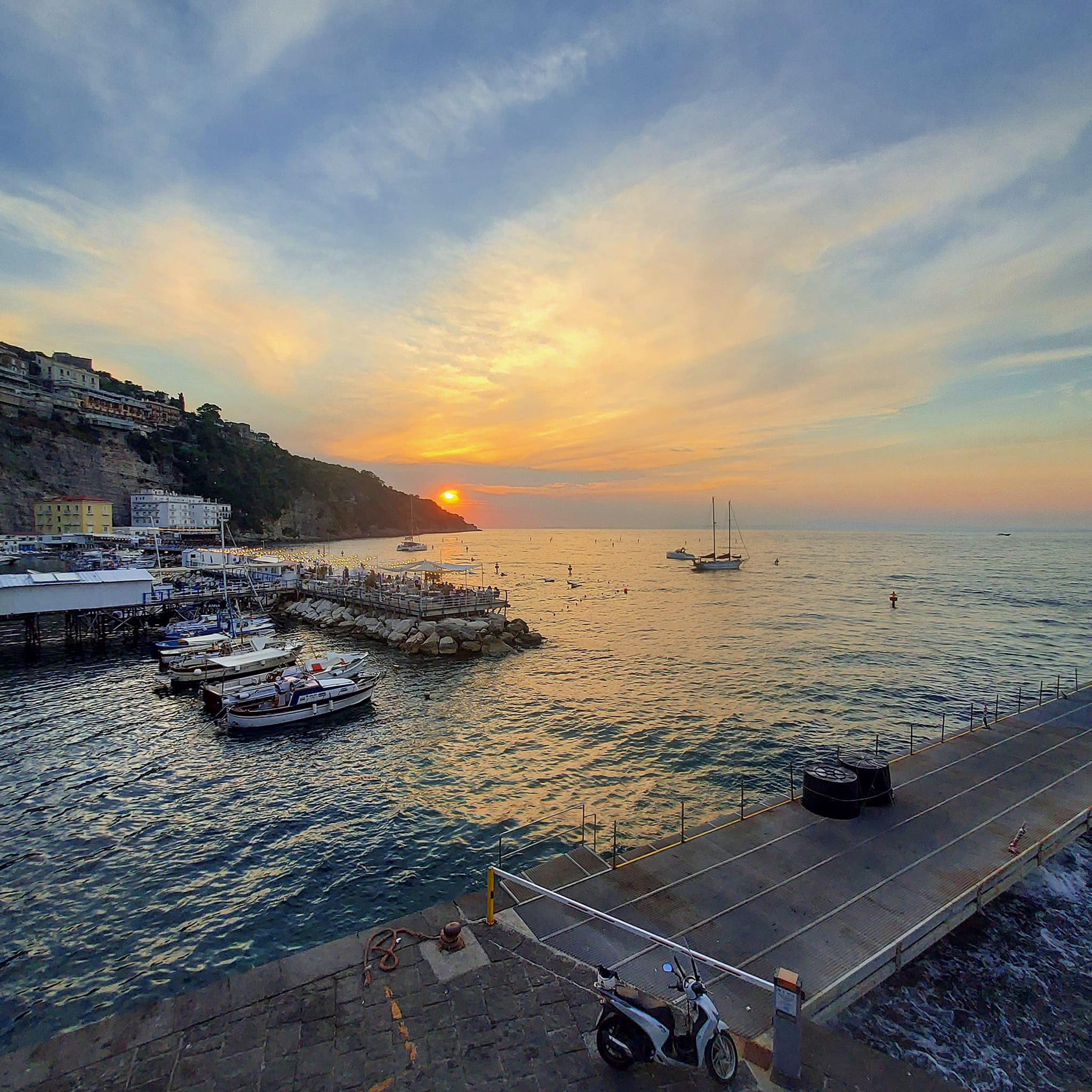
Sorrento, according to Greek mythology, was home to Sirens, who lured sailors onto its rocks with their mesmerising songs. Today, tourists and locals alike gather above those rocks, lured not by song but by sunsets. A place to stand and pause, capturing a memory or two against the vibrant colours of blue, fiery reds, orange and deepest yellow hues that fill the skies.

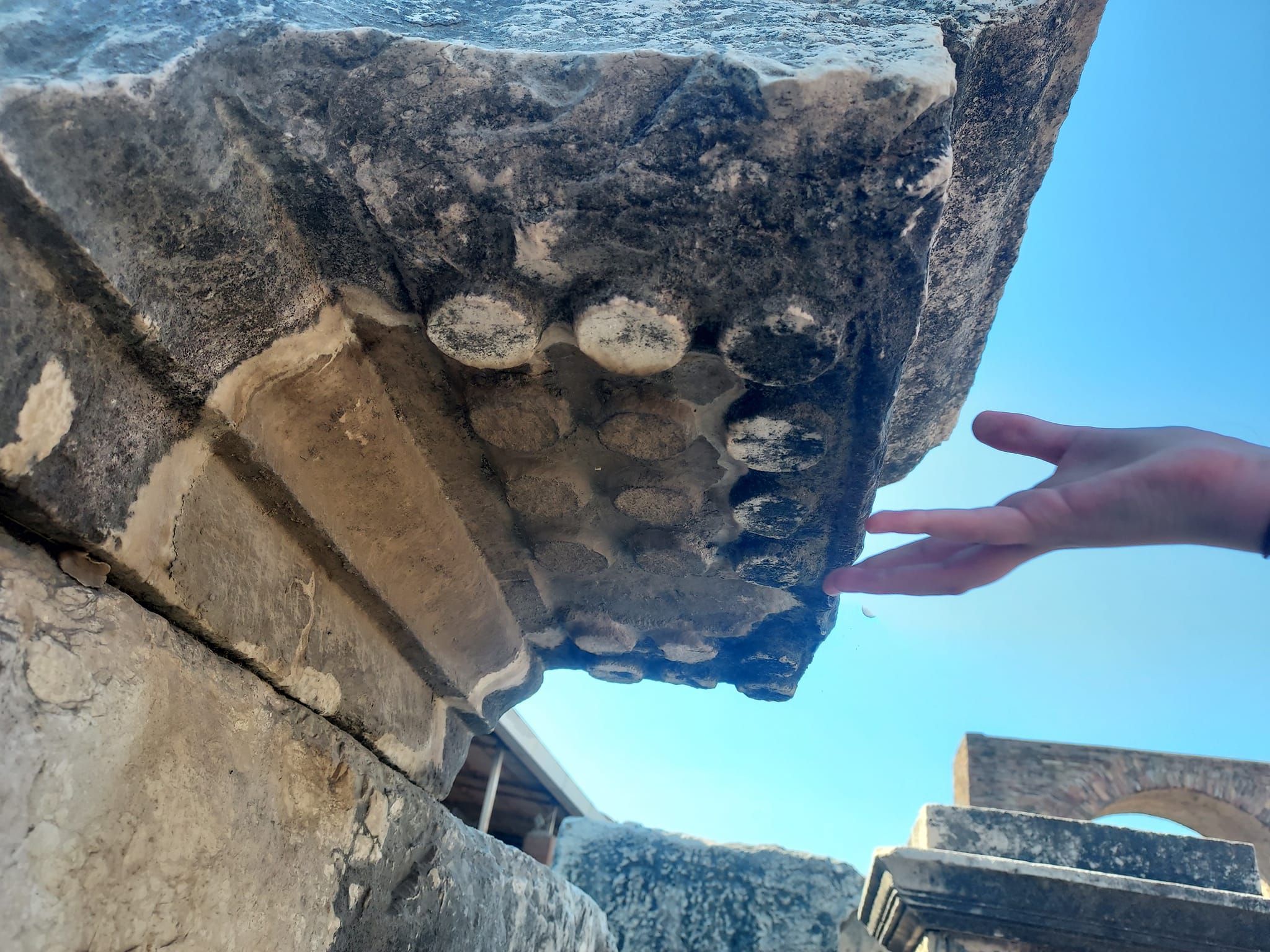
A short train ride along the coast finds the ancient city of Pompeii and its neighbour Herculaneum. In AD 79, a cataclysmic eruption of Mount Vesuvius, known to locals as His Majesty, destroyed the lives of over 16000 inhabitants and the livelihoods of those fortunate enough to escape the suffocating clouds of ash or the pyroclastic flow.  Wandering through Pompeii’s ruins, our local tour guide brought this legendary city to life as she told us stories of some of the people who once lived and worked here. The rich, the poor, the everyday and ordinary lives and their extraordinary blueprints for so much that we know and use today. Who knew, for example that house builders in Roman Pompeii knew the design for LEGO centuries before LEGO did? Our guide told us much of what she knew; human stories of human lives, achievements, hardships, joys and sorrows. Baking bread, shopping for clothes, going to the theatre, gossiping in the town square. Every day life of men, women and children, living and thriving in community.

‘Lego’ type design found on building blocks in Pompeii

One of the most remarkable outcomes, at least to me, of the story of the Volcanic eruption in AD79 is how the surrounding area eventually recovered from this catastrophe. The whole region is famed for its produce. Olive groves aplenty, vineyards, oranges, lemons and much more are to be found on the slopes of Vesuvius in abundance. And, according to historians and geologists, the land became far more fertile as a result of the eruption. The economy recovered relatively quickly and future generations enjoyed the spoils from the enhanced rich soil. They thrived. His Majesty Vesuvius brought life as well as death.

When my daughter, who has Down’s syndrome, was born I was given a poem. The poem was about a planned holiday to Italy being diverted in the air and landing in Holland instead. This poem is well known in the Down’s syndrome community and is a bit like marmite in the way it divides opinion. Personally, I found it to be well meaning, but deeply disappointing. No offence to the Dutch; I’d love to visit their country too one day. But I will not allow anyone to steal Italy from my heart or my dreams.  Having a child with Down’s syndrome is not a diversion or even a different destination; who knows where any of us will end up in life after all? Neither is it a catastrophe as some think or express.

What happened in Pompeii was a catastrophe. Having a child with a disability is not.

I do not minimise the challenges that come with bringing up a child with Down’s syndrome. I never have, I hope. The opposite in fact. I have no desire to ‘lure’ any parent faced with the news that their baby might have a disability into a false sense of security, when the journey is clearly fraught with, at times, hard, rocky places. But modern day Sirens still go off where disability or, in particular, a diagnosis of Down’s syndrome is concerned; bringing fear, panic and urgency in decision making. They need always to be tempered, in my opinion, with a softer, sweeter song. A song not of falsities or deception, but of hope. There is still life to be had, to be lived, to be enjoyed. And in many ways it is a life more vibrant and verdant than before.

I do wish that my daughter’s life, and the lives of others born or unborn with disabilities are seen first and foremost as the humans that they are. Perhaps, if they were, there would be no need for a Down’s syndrome community or a disabled community.

Just a community would be enough. 

A community more welcoming, more supportive, more vibrant, more fertile, more prosperous and hope-filled for all its inhabitants, its humans, than ever existed before. Thriving.


Leave a comment

Lost and Found

Image by Peggy und Marco Lachmann-Anke from Pixabay

I don’t remember the last word you spoke. I had no idea you had no more words to say, so I did not think it important to make a note. 

I wish I could remember when you last spoke. I had no idea your speech was reaching an end and I did not notice it slip away. Your words carried off into the sky on the breeze of busyness. For a while I did not realise they had gone.

If I’d known I would have looked up sooner at the sky, the trees. I wonder if their branches would have caught your words, and held on to them….at least for a while. Giving me a chance, perhaps, to climb up and take them back for you. One by one – no phrases. In reality, only a few words anyway, now tangled high up at the top of the tree. Out of reach.

Like a child’s once preciously held balloon and now abandoned to the elements, your words disappeared. Snatched out of your hand whilst no one was looking. Taken from your lips. But unlike that child, you did not cry or alert me to your loss. How could you know what to say when what was missing was needed to say it? You let it go without a fuss.

Occasionally someone notices the balloon in the tree. In winter, no more than a dash of colour against prison grey boughs. In summer, glimpsed only from within, under the canopy. Protected by the greenest of leaves, but still there. 

Oh no, they proclaim, someone has lost their balloon!

Perhaps they know the sinking feeling of watching their own child’s balloon float away. Just…. out…..of…..reach……. Momentarily, or perhaps for longer, they feel that pain.

I still notice the balloon.

I see that tree every day and I see the balloon. Your balloon.

For a long time, the lost balloon has made me sad. I have tormented myself with questions as to what more I or anyone could have done to help you hold onto it. Treasured, painful videos from back then remind me of the time you had with your balloon. 

Whatever the reason, the balloon took flight and has not returned. And I can no longer see it in the tree.

You don’t even look for it. It does not matter to you. You spend no time worrying about the things you do not possess, even if they were once yours.

Instead, you notice what and who really matters in your life. With your entire being you speak eloquently and joyfully, leaving me in no doubt of what is important to you. No words required. You hear a song and your body sings it back to me. You understand melody with the best of musicians. You see someone or something you love and your hands give a speech of their own.

You also notice the tree, but simply because it is magnificent! Like you. And like those around you who never had a balloon in the first place. Some of them your classmates or friends you have made along this different path. They too are magnificent, and like you, they speak in ways too lofty for most people to hear. Maybe that’s where the balloon has gone. Higher up

You look for what remains, for what is. Not for what has gone, though the balloon was nice whilst you had it.

Love remains. 

And if you never speak another word in your life, love remains. Or if one day you find your voice again and never stop talking, love remains.

The balloon was desirable; so many things in life are, and I missed it when it let you go.

Yet love is far and away much easier for us both to hold onto and is tied in such a way that cannot easily come undone.


Leave a comment

The Garden

Image by BARBARA808 from Pixabay

I settle back in my chair. By the window, looking out on to The Garden.

The chair I have just bought so I could look out at the garden I have just planted. 

Aching legs, tired arms, calloused hands.

Weary. Content. Exhausted.

Her garden. I mean it’s mine, ours. But I have planted it for her.

Grasses that will sway, Lavender that will seduce. French, naturally.

Hustling Hostas; each one thinking they are the star of the show. 

They do not realise how much they need each other

A copper windmill, jewelled with stones of purple and red and blue. Ponderously regal. Disdainfully, it shares the stage with a water feature….a resin hand-pump masquerading as cast iron, surrounded by a family of acrylic white ducks. Yet it might as well be Royalty. To her it is a thing of great beauty. Its diminutive trickle of water elicits sounds of great joy from her. She is non verbal. My daughter.

So I love it too

Oh and there are butter yellow Calla Lilies! Still beaming at dusk; positively shouting at dawn.

Like her.

There are spaces yet to be planted. Gaps. Bare patches. Problem areas. This garden is incomplete. I hope it is never finished, for where would the joy be in that? 

We will do things differently. Experiment here and there. Get things wrong. Get things right. It will be hard work, often very lonely, but it will also be rewarding. Not in Gold medals or Silver Gilts, as we are unlikely to ever meet the criteria for those; but none the less, so very rewarding. There is no competition.

And though we still live on a busy road, in a busy town, where noise, traffic and so much more disturbs our peace, where there is so much about our lives we cannot change, though we would like to…. and though passers by and those who pass us by, may have no idea even of our existence; we will be enjoying the garden.

For it is a safe place for her. 

And me.


1 Comment

Emeralds and Rubies

Photo by Sarah K Graves @ Pixabay

It’s a thing of beauty, my daughter’s favourite toy. It stands apart from the usual plastic playthings a child of her age may be drawn to. There’s a quality in the workmanship that can only be admired.

Bejewelled with rubies, sapphires, amber, amethysts and emerald ‘stones’, it spins on its wooden base with the lightest of touches. A little encouragement is all that’s required to make it dance.

Place it in the path of sunlight and it positively sings with joy.

And yet it’s fragile. Prone to tumbling off the table and clattering loudly, ungainly, disappointingly to the floor. Brushed off, knocked down, discarded.

And unless I am there to pick it up and put it back on the table, that’s where it stays. You see, my ten year old, non verbal, autistic daughter who has Down’s syndrome has never learnt that when something or someone disappears from her view, it or they are actually still there or somewhere else. Existing or existed, but now hidden. She has not learnt that her favourite toy can be experienced or even enjoyed again if only she would look for it. So she turns her back and walks away. She forgets the joy the toy brought and moves on to her next experience. 

Out of sight, out of mind. 

Until last week.

Last week was different. What changed, and why, I have no idea. Others more widely educated in these learning processes can explain. All I know is the toy dropped as it often does but this time she went looking for it. She bent down, she picked it up and it was she who put it on the table then continued to play with that which brought her joy. Her delight carried on as before, but her world had, in that moment, opened up and my delight was off the scale.

A first. An action I had given up on ever being possible. 

This time, there was no turning away and moving on to another experience. This was the one she wanted and she took hold of it with both hands. She noticed it had gone and that now mattered enough to go looking. My assumptions about her were wrong. 

Rubies, emeralds, amber and sapphire danced again in the columns of warm spring sunlight that streamed across the table. 

An ordinary table in an ordinary kitchen on an extraordinary day.

A pleasure that was hers for the taking and she was finally able to seize it.

Some ten years ago, after many weeks, she came to be discharged from the neo natal unit that had been her home and our place of safety.  A kindly consultant handled our departure and, sensing my unease at having to leave what we knew, told me of how much the world had changed even in a relatively short space of time. Just twenty-five years earlier her cousin had been born with Down’s syndrome and was routinely put into an institution. 

Out of sight, out of mind. 

The sadness in her eyes stayed with me. The if only was palpable. 

She knew there were so many colours waiting for this baby. My baby.

Ruby reds, ambers, sapphire blues, emerald greens.

I noticed she spoke only of her cousin in the past tense.

I hope someone walked with him and pointed out colours.

Like in a rainbow; though I imagine he noticed them first.

Last week the colours got a little sharper in our Down’s syndrome world. And now my daughter knows she can at least hold them in her own hands. 

I see others similar to Hazel, they are picking up brushes and painting rainbows like I’ve never seen before. New colours coming to the fore in a shifting landscape. Emerging artists taking up residence in a world that still struggles to embrace their art form. Their Down’s syndrome. 

We should not take their palettes away thinking they cannot paint. Neither should we begrudge what they find or what they are given. I have found they will share their lives, their experiences, their possessions willingly and extravagantly. They are not the ones needing lessons in humanity. From my little window on the world of Down’s syndrome Ive noticed they are often the first to show empathy to anyone who is treated differently.

When another cries in the room, my daughter cries too. Every time. 

Instead I want to stand back and watch them pick up the colours that matter to them. However they pick them up, whatever their understanding or ability is.  What will their world look like to them? How will they depict it, shape it, colour it? Who or what will they paint into it? 

I no longer want to assume I know what’s best for my daughter or for others with Down’s syndrome, or anyone else for that matter. I do not speak for them. They are not voiceless and never have been, it’s just our world paid no attention to their voice or afforded their particular art any worth. The loss of colour to humanity must be, I have often thought, incalculable. No. Instead, I want to learn from them, from the experts, the artists. I’m convinced we can all move forward into new and more vibrant life experiences when we do.

Of course I’ll have my own opinions, and in future I’ll try harder to keep these to myself if I cannot be sure they will do someone, somewhere some good. But I do want to see a people group who, though in the past were routinely placed in institutions and are still discriminated against simply because they have Down’s syndrome, are now brought front and centre where their colours can be seen as they were always meant to be. Not because they are better than anyone else, but because they’ve spent more time than anyone else under the table.

Out of sight out of mind

Some say diamonds are a girl’s best friend. I say it’s emeralds and rubies, and they can be friends to anyone.


2 Comments

Listening to you

Photo by Brands&People on Unsplash

Two terrible words were spoken with some force over my non-verbal, severely disabled daughter recently. A moment of frustration by one who briefly had care of my child and ought to have known better, but, for whatever reason, didn’t. I write this not to invite a pile on or indeed look for sympathy. Their words alone have brought enough shame on them, whether they know it or not. And they remain a good person who made a mistake. This is not about them.

But their words did damage.

Not so much to my child; as in an apparent, one-off moment of uncontrolled frustration, the words spoken went literally and metaphorically over her head. She could not/did not understand them, though she may have felt their force. Others heard, however. Worse still, another child heard. And that matters.

In the space of two brutally uttered words, a story was told to anyone in earshot, especially that other listening child. A narrative of shame. I wasn’t there to hear them spoken first hand and indeed I was calm as I wrote them down on a post-it note during a phone call I don’t think I’ll ever forget.

As I did so, my mind began to fill with many more brutal, ignorant words that have been spoken over her by others. People who have had an audience of others to hear them.

Risk. Burden. Problem. Tragedy. Sorry. Terminate. Deal with it. Get rid of. Did you know before hand? Didn’t you take the test?

Words that hurt then but more so now, alongside words of comparison that continually attempt to steal my joy. Not her joy, thankfully. That appears to be intact.

Words that suggest she is unworthy of life itself. That being human can’t surely mean including people like her. Genuinely? I think she embodies being human; and….quietly, simply, she includes the rest of us without question.

Lately, I’ve more keenly felt this unworthiness that is pinned onto her life in so many ways. Whether it is the lack of good health care and research that doesn’t just label each problem we encounter as ‘typical Down’s’, or the lack of opportunities for her to be fully part of our wider local community. Then there are the barriers around her physical development that do not seem to be there for children without a Learning Disability. Or perhaps it’s her future, and ours. What will become of her? What kind of opportunities will she have as an adult? How will we/she cope? Who will care?

This incident simply served as a trigger to all those feelings and more.

I closed the call and found myself in pieces.

She lives her life at the very opposite of the words spoken forcefully over her by those who do not know her or even wish to know her. Words spoken perhaps through fear of what they do not understand. Or in anger towards that which appears out of their control. They make sense of these emotions by framing her in the closed doorways of their own prejudice.

She is positioned to suit them. Their narrative. Their take on the world. Their needs. Their concerns. And she remains outside the door. Hurting no one yet on the receiving end of cold, harsh judgements.  Others then hear this narrative and are empowered to proclaim it too.

Yet I am thankful that there are those people in her life whose doorways are open. They position themselves before her, at her feet. In front of her wheelchair not behind it or above it. Many of them. Not least her teachers, respite providers, disabled community support workers and volunteers, her family and our friends and more. People who take up a position not in some kind of worship, adoration or even deference, but a posture that looks up at her in order to learn and care. Not one that looks down in order to control.

The spoken word may carry truth, joy, hope, compassion and ultimately life to the listener. It may also carry fear, anger, pain, confusion, untruth and even bring death to the hopes and dreams of whoever might be listening.

Narrative:

A spoken or written account of connected events; a story.

The narrative about my child, and others with Down’s syndrome or other Learning Disabilities, has been collectively written. It is then spoken out by and to a society that stands above them instead of kneeling down and facing or even looking up at them. Control, fear, and, perhaps, an unwillingness to humbly learn from a different other.  It’s the natural response for many and, before I knew my child, I was guilty of it too. This post is not about the condemnation of anyone. 

I am thankful for those who open their doors, welcoming my child in, then daily kneeling down in front of her to care. Their words and actions are life giving, not soul destroying. They help rewrite her story.

And, because of them, her story has become a sacred text; highly valued and important amongst the Chronicles of what it is to be Human.

Reader, if you’ve read it, please pass it on to someone who has not; for no one should ever be called a stupid girl.


Leave a comment

Clouds

I take off your glasses and wipe away today’s pursuits.

Stratus make way for cumulus.

Your vision always so clouded, yet you look up to search my distracted eyes and smile into them.

I take off your shoes and remove the plastic orthotics that cage your hot, sweaty feet.

I remove your socks to change them and, momentarily, your feet are free.

Your mobility dependent on these devices. Always and forever.

I’d offer you a drink of water but you have not learnt to take it. So you play with the syringe plunger as I tube feed you, directly into your stomach. How remarkable a thing that is – life!

Nine and a half years of it.

Taking your weight, I lower you to the floor to change you; imagining the equipment we will one day be gifted, (for it will be a gift), to do this with dignity.

You smile.

Probably the same smile you gave the person who did this for you at school today.

Clouds are extraordinary.


Leave a comment

Mum’s the Word

Recently, my almost 12 year old asked me a question. Actually she asks me loads of questions. Most of her conversation starters begin with “ I’ve got a question”. This has been the case for a very long time. I’ve been told this can be a feature of her Autism; a kind of verbal tic even, but I’m not sure that’s helpful. I see no reason to medicalise or even analyse her every characteristic. And, whatever it is, I quite like it. It gives me a moment to prepare for whatever might come next. It’s rather charming too.

Her question was this:

Was it ok for her to still call me ‘Mummy”?

She is my firstborn. She has always called me Mummy. This is my name as far as she is concerned.

And she was concerned. She had presumably heard others at school refer to theirs as ‘Mum’. She was worried that she might be expected to make a change, to fit in with others, to appease them. To not stand out or appear babyish. And here is where her autism really does kick in. Changing my name…changing that familiar, constant, never previously questioned name was a step too far for her. Venturing into the Land of Unprecedented. A change that society seemed to want to force on her. I am her Mummy. She said.

And who am I to argue?

I am her Mummy. For many years, I thought I might never be anyone’s Mummy.

We live in an age where, increasingly, we are encouraged to identify as whoever we want to. This isn’t a blog post questioning or criticising that….far from it. If I could have identified as a Mummy when I was in my 30’s and held a baby in my arms, I would have done so – in a heartbeat.  It was not in my control to do so. There was no child for a very long time to bestow that identity on me.

Eventually, after many years, M brought me that identity. I call it a privilege because it feels like one. Even now. Still. I will never get tired of hearing her call me Mummy. Or Mum, if she chooses to.

Recently, I’ve noticed a frustration creeping into the SEN/disability parenting world from parents who wish they weren’t continually referred to as ‘Mum’ by professionals in appointments or meetings. They want to be afforded the respect of being addressed by their actual name. I fully understand their reasons why, but I just don’t feel the same way for reasons I’ll try to explain. The word Mum or Mummy can often feel like a label. Slapped on carelessly at times. It can feel belittling to be in a room of professionals with all kinds of titles as well as letters after their names and be referred to as ‘Mum.‘ It’s sometimes as though before you’ve even entered the room or said a word, your opinion will not carry as much weight as theirs. You are just ‘Mum’ after all. I get it. I really do. I’ve felt that sense of inadequacy being bestowed upon me by those who believe they must know better. Thankfully only on rare occasions, but I have. But I’ve also had to recognise that, they do often know better than me on all kinds of levels. And, quite simply, being a ‘Mum’ to me is not belittling. It’s a title I love and cherish. A title that brings to the table as much as those with professional titles do. Often more so. The problem, I think, is not with the name or title – it’s with the understanding of who that name or title is.

Ultimately, this is just not a battle I am choosing to fight. I have no issue with others doing so, however. And so, although it has occasionally happened to me, and I’ve been labelled ‘Mum’ in a way that may not recognise what I bring, I’ve learnt to peel it off and reapply it as a badge of honour. A privilege. Undeserved. Something that I did not earn or study for; it was a gift out of the blue. But still mine to wear nonetheless, and a weighty one too.

I don’t think I will ever mind being called Mum. Or M’s Mummy, or Hazel’s Mummy. After years of heartache at not being one, why would I? I have many friends and acquaintances who would also give anything to have that name. Their own heartaches of baby-loss, losing a child or of infertility means that the name ‘Mum’ carries real pain and/or remains unattainable.

And, of my own two children, even after nine years, one of them has never called me Mummy. Not clearly, not properly. She is also Autistic but Non-Verbal. She sometimes forms a sound ‘Mmmmm’ when she sees me, or when she is poorly and needs me. That’s the closest she comes to using my name and it makes my heart sing when she does. So when others, even professionals, refer to me as Hazel’s Mummy, I have to admit to feeling nothing but pride. I can’t help it. It’s something I cannot ever take for granted. And I want her to hear my name used as often as possible. Who knows, perhaps one day she will say it back to me if she hears it spoken often enough.

If the role of being someone’s Mum came with the honour, respect and dignity it truly deserves in society (and not just on Mother’s Day) then perhaps other ‘Mums’ wouldn’t feel so belittled or put down.  Perhaps others who find out they are going to be a Mum will feel supported and respected enough to continue their pregnancies instead of feeling that they have no other choice but to end them. Perhaps those ‘Mums’ who are told their unborn baby has Down syndrome will be honoured and respected by being offered all the help in the world to birth and care for their child. Instead they are often routinely steered in the opposite direction and told it’s for the best. Their role as a capable Mum called into question in those first few weeks and months of pregnancy and never even given a chance. Perhaps those who have suffered the pain of loss through miscarriage or losing a child in later years would be afforded the dignity and honour of being recognised as their Loved One’s Mum – always. And perhaps those who long to be a Mum but, for whatever reason have not been handed that title, would have their pain recognised and given all they need or want to help carry it.

Titled not labelled. Dignified not denigrated.

Mum. Mummy. Mom. Mama. Mam. Me.

Mum’s the word to be shouted from the rooftops, never silenced, never shamed.


8 Comments

Herons and Cranes

miguel-pinto-VhaZJ_7YW9o-unsplash

I’ve been spending a few days in a relaxing and isolated place, booked pre-pandemic, overlooking some fishing lakes. As I write I can see three, sometimes four, herons gliding gracefully over head. Such extraordinary looking creatures in flight. And, once on the bank they adopt sentry status, scanning the lake for fish whilst giving a masterclass in superiority. Until they call out that is. A sound akin to finger nails on a blackboard. Beautifully harsh. Something about it grates and leaves the listener uncomfortable. It jars. Profound beauty and harshness held in tension. The herons take flight and with them my breath.

My daughter’s life, her whole existence, is profoundly beautiful yet also harsh. We live, she lives, with the tension of these truths. And, as a consequence, she takes my breath away daily.

Many, even sometimes those in our own community, see the disabled life as something to be avoided. I know I did when Hazel was born. I’ve written about it before..how I hoped she would have some kind of Down syndrome light version of the condition. Not too bad, manageable, successful even. There are no limits on people with Down syndrome is how the new mantra goes. They can learn to read and write, go to school, get a job, play sports, live independently, be models, actors, politicians, get married and so on.. All true and all good, I don’t deny it for a moment. They often do.

So don’t worry, we tell new and expectant parents; It’s only an extra chromosome. Keep calm.

I disagree.
It is not only an extra chromosome.
It is a profoundly beautiful life.

Not because of any achievement or indeed any similarity to a life without an extra chromosome. It’s beauty is in its existence. It should not need to be championed or given a reason to be accepted. It is already beautiful, profoundly so.

My attempts, early on in Hazel’s life, to disguise her ‘disabledness’ (which probably isn’t even a word) thankfully and spectacularly failed. Hazel comes with an array of visual reminders of it; a feeding tube for starters, then there’s the equipment, hoists, stairlift, adaptive chair, a hospital style bed, not forgetting bifocals for very poor sight and also soon to have hearing aids. Hazel is non verbal and makes all kinds of noises that loudly announce her presence to the world wherever we are. There is no disguising Hazel! Oh, and she laughs. A lot.

Hazel has also been learning to walk. At almost 9 years old she can now walk around the house or familiar places with gusto. Stomping and lurching as she explores familiar spaces now revealing previously hidden vistas and treasures. Her achievements are tremendous and we celebrate them daily.

And yet. Remove her plastic clunky orthotic devices and her world shrinks once more, her weakened frail ankles collapse and she falls to her knees in a single step. Those unattractive plastic devices are, to me, of profound beauty and huge importance. They are enabling her to discover new and exciting things for herself, though her wheelchair is never far away.

Wheelchairs. Feared and avoided by many parents of children with Down’s syndrome, particularly in the early years. I know this..I was one of them. So much so I opted for a buggy that looked somehow more er, um… acceptable. I thought that having a wheelchair made her look more disabled. Well. Yes I suppose it does. But that is only a negative if you also hold the view that being disabled is something to be shunned. It depends on your assumptions about disability. My assumptions were so very wrong. I mean, it’s fine if you don’t need one, but it’s also fine if you do.

Is Hazel worse off because she uses a wheelchair? Is she worse off because she wears orthotics? Or is she discovering joy every single day in new places because she has them? Is she to be pitied because she is shortly to be wearing hearing aids or will people share her joy as the sounds we take for granted enter her world for the first time? And if they don’t work, if she doesn’t take to them for whatever reason, will that be seen as failure or will she be allowed to live her life in the way she feels most comfortable?

To me, her disabilities just make me more determined to travel further into her world and see it though her eyes and ears. I desire to make her pathways less fraught with obstacles and trip hazards. Where those obstacles cannot be removed I want to help her find another way over the terrain. This is what Hazel needs from our community, from those who care for her, from medical professionals, teachers, and especially Governments. Policies, medical research, social and educational opportunities that will enable her to really live her best life; whatever support systems she needs or we may need as parents to help her. What she does not need are assumptions that her life is not worth living. That she is failing or in need of pity because she looks more disabled than another. That her life is less. Neither do we need assumptions that, as her parents, we can do it all, that we don’t need a helping hand from time to time. Caring is a very precious and undervalued thing indeed. Assumptions can be devastating, checking them and challenging them can bring change to entire communities.

A friend of mine often says to diminish one of us is to diminish us all.

Just this week I was reminded of the heart-rending story of a disabled community in Japan- the Sagimahara Institute – where, on 26 July 2016, a man attacked and killed nineteen residents and injured twenty six; thirteen of them severely. His intention was to ‘obliterate’ hundreds of people who he deemed unworthy of life. A drain on their carers.  He believed he was doing society a service.  The tragedy became Japan’s worst mass killing since the Second World War.
An extraordinary video called Sachiko’s Story Nineteen Paper Cranes tells the story so movingly and asks the question,
“Why does the world assume that a disabled life is not profoundly beautiful?”
I will not spoil the story – do watch, you’ll be glad you did – but what followed in response to the killings was truly beautiful.

Landscapes can be harsh environments to live in and journey through but at the same time profoundly beautiful. We need to adapt to their contours, their peaks and their valleys. Not circumvent them or leave them off the map. Or, worse still, destroy them altogether.

This is my daughter’s disabled life and it will always be profoundly beautiful.

#dontscreenusout


9 Comments

Close Up

raindrops

Sunday evenings, at least here in the U.K., may be sometimes spent watching the most extraordinary wildlife documentaries on television. Against backdrops of breathtaking scenery, coupled with state of the art photography and filming, you can be taken on amazing journeys, encountering incredible creatures and habitats. Microscopic technology takes the viewer from the comfort of their armchair on a voyage of infinite discovery. Ordinary grains of sand, for instance, taken from the beach and magnified to reveal a dazzling Aladdin’s cave effect. Stunning jewel like precision and design. Each one different, unique, whether you believe them to be created or evolved. Redefining the meaning of a close up. Jaw dropping photography.

The hardest of hearts can be moved to tears at the sight of once magnificent sea creatures now suffering a terrible injustice. Suffering because of the shameful amount of plastic we humans have disposed of in their environment.  Whole movements that seek to reverse this horror have been born out of witnessing such atrocities. We care, they say. Though we didn’t used to, we do now.

Such is the power of technology; it advances our understanding of the world around us and helps us set to rights the wrongs we have committed. Technological advances being used for the good of the environment and, ultimately, all its inhabitants.

Yet it troubles me greatly that this same technology that allows us to travel further than we’ve ever travelled before and see in micro detail that which was previously unknown is so very, very limited. A technology that sees everything yet at the same time sees nothing.

Screening tests that are more advanced than ever before can now detect the possibility of Down’s syndrome in the unborn earlier than ever. (And, worryingly, it’s not always pointed out that the results can be wrong). Technology is so advanced that it won’t be long before all kinds of other genetic conditions are identified in utero. Many believe this to be a good thing. Technological advances supposedly being used for the good of society. Yet the ‘good’ these particular screening tests do is questionable, more often than not at the expense of another and largely unchallenged from an ethical standpoint.

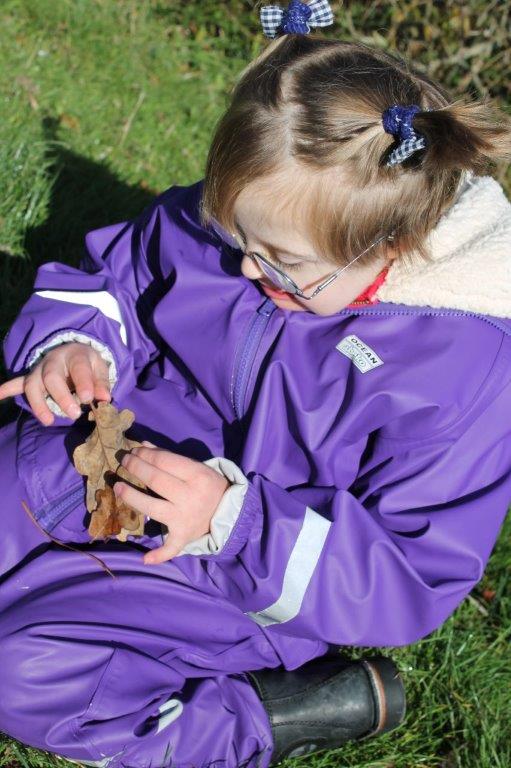
As I write this blog, my daughter, who has Down’s syndrome is clutching a leaf.

It has held her attention for some time now. She marvels at it. Holds it between her fingers and spins it. She does not speak words, yet her voice echoes the joy she experiences from examining the leaf in her tiny grasp.

I hear her.

I hear too her newly acquired footsteps around the house. A sound that still makes my heart sing. Each footstep fought for over the last eight years.  Footsteps that we wondered if we’d ever hear. Though it wouldn’t have mattered if we didn’t …not greatly anyway. We do not measure her life by whether she can walk or talk. We do not measure her life at all really. How could we? It’s impossible to measure the joy she brings us each day, even if we tried. She has redefined the meaning of close up as she enables us to see so much more of life than we ever realised was there.

Just like it’s impossible to detect much more than one extra chromosome at a screening test. A truly advanced technological breakthrough that apparently tells you so much yet actually takes you further away from the reality of what or who is really there, beneath the surface. Waiting to be discovered, waiting to be loved, waiting to be nurtured, waiting to be cared for. And yes, I still count it an absolute privilege to care for, marvel at and learn from another human being, however many challenges there may be, extra chromosome or not. Indeed, parents, advocates and of course people with Down’s syndrome themselves are increasingly fed up of being told to bow at the altar of personal choice when it comes to prenatal screening. As if a person with Down’s syndrome were just another option at the Fresher’s Fayre of parenting options. Discrimination has never been so cleverly disguised.

I wish that in every heart that is rightly moved by the plight of the cormorant trapped in plastic or the dolphins tangled in discarded nets, there would be found the same outrage towards the plight of people with Down’s syndrome. An Extinction rebellion – though of course Down’s syndrome itself can never be made extinct even though worldwide efforts to prevent live births are abhorrently successful.

A people group so targeted by technology before they are even born. Deemed unworthy of protection yet feared enough for detection.

A lens that can detect them yet does nothing to protect them.

A lens that sees everything and nothing.

It appears to me that the lens is facing the wrong way.

H & leaf

For more information about what it’s really like to bring up a child with Down’s syndrome go to Positive About Down’s Syndrome