Downright Joy

Discovering joy in unexpected places – a journey into Down's syndrome, Dyspraxia & Autism


Leave a comment

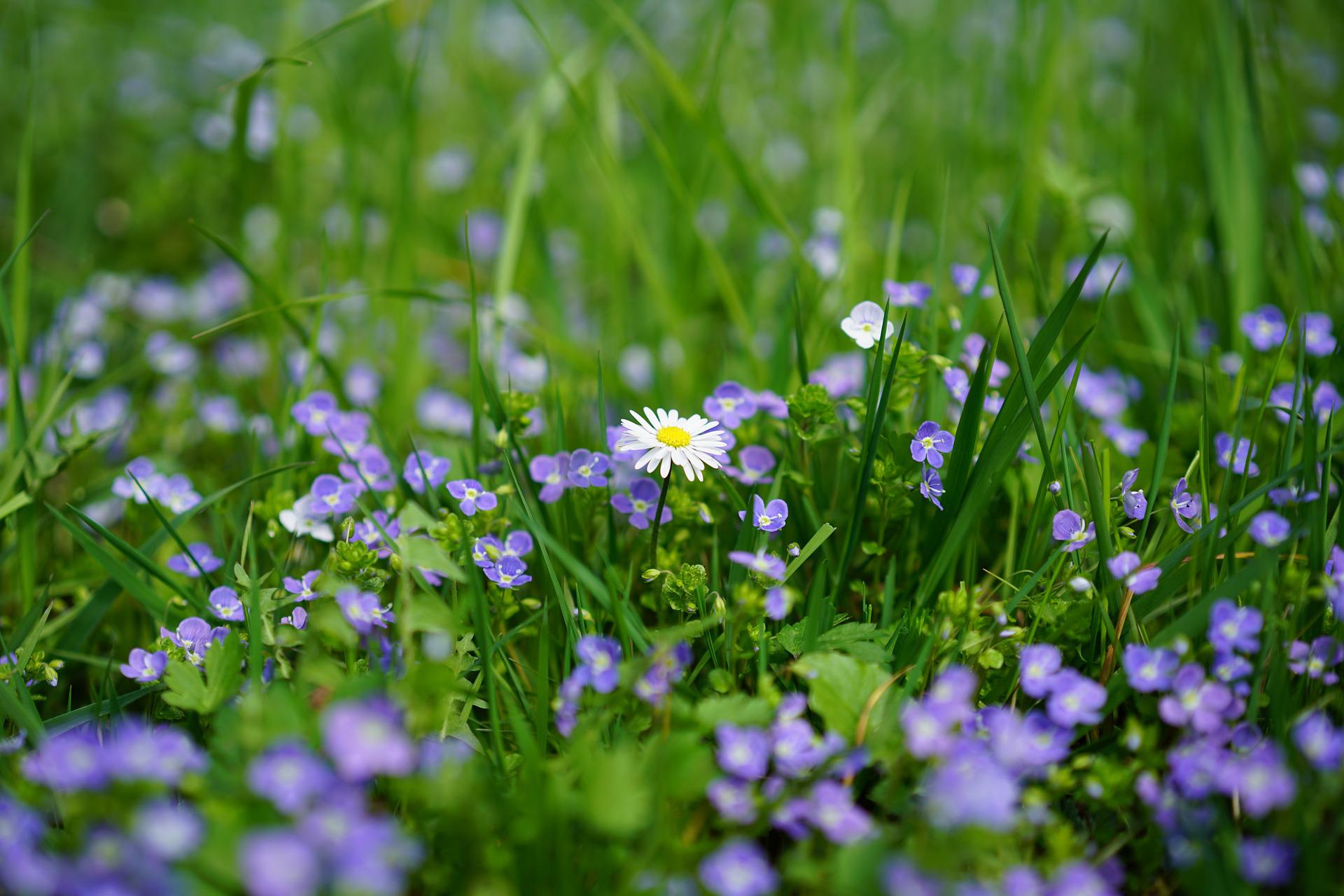
Trampling Through Tulips

Photo by Marija Zaric on Unsplash

For those of us well versed in all things Down’s syndrome related, we are likely very familiar with the poem ‘Welcome to Holland’ (You can read about it here if you’ve not come across it). 

Perhaps it was handed to us as new parents around the birth of our baby; a child born carrying an additional chromosome.  Or perhaps we stumbled across it as we trawled the internet searching for answers to allay new found fears and uncertainties in those early days of parenthood.

It’s a poem that divides opinion in our community, but this isn’t a post about its virtues or its vices. If anything, I’m Team Italy…mostly because of my family connections with a country that has long had my heart for many decades. So, Welcome to Holland did little for me when I was introduced to it some 14 years ago, but it still has its place for others, I cannot deny.

In reality, neither my experiences of the Italian way of life, or my understanding of how the Dutch operate bear much resemblance to where and how I actually live, as the parent of a teen with Down’s syndrome and complex needs.

Mamma Mia! 
The tulips round my way are long past their best.

No. Instead, I find myself residing here, in Suburbia, living at Wit’s End. Brought here on the Sleepless Night (after night) Bus, without it seems, a return ticket. Hopping on and off along the way to search for answers to this month’s health dilemmas. No, I’m wrong…..searching first for an appointment to look for answers to this month’s health dilemmas. Trying doors that say “Welcome” or “Open” only to find them cruelly locked from inside. I think, on occasion, I may have imagined the sound of laughter from within. 

And so here I am, living at Wit’s End. Carrying little else but the complex needs of my disabled child. Bags still hopefully packed with my dreams for her life. For our lives. 

Yet it’s here, not in Holland or Italy, that I find, in fact, I’m not alone. If I thought the centuries old, cobbled back alleyways of my beloved Sorrento were crowded with fellow travellers, it’s nothing to this place. It’s not very Instagrammable though, this Wit’s End. I’ll give you that.

But it’s here we gather. Each bringing our own stories of how we got here, of who would not listen to us, of who dismissed our fears or rubbished our requests for help. Telling each other stories of how many times our loved ones (and us as care givers) were failed, ignored, mistreated, maligned.

You would be forgiven for thinking that Wit’s End is the most depressing place on earth. 

And yet it is here I find my community. I find those who reached this destination long before I did, and are ready to welcome me into their homes, to explore their hive-minds, share their lives filled empathy, understanding, compassion, humour and so much more. Here I find, almost without fail, someone who will ask me “Have you thought about this…?” Or “What about trying this, it worked for us.”

It’s here, in the village of Wit’s End, I’ve found people who want to know and understand my child, and me. I’ve found Complex Carer Nurses, I’ve found parents of children with Down’s syndrome and or other conditions and complex needs. I’ve found other Wit’s Enders ready to make me laugh and not take myself so seriously. Quick to bring perspective, a joke, a slice of cake and a cup of coffee. There is, I’ve found, an end- less supply of Wit to be found here and I am eternally thankful for it. Heck, in my neck of the woods there is even our own Farm …a place with those ready to share our load and give us respite from our travels!

One of the most beautiful things I found about the Italian way of life, aside from the art, the architecture, the scenery, the beautiful weather, the food…..I could go on……is how much they know each other and are known by each other.  The sense of community there, I’ve always felt, is to be envied by us more insular Brits. But perhaps my beloved Italian culture is closer to my own experiences than I think.

Being known and heard is everything when you are a carer to a child (young or old) with complex needs and disabilities.  I may have been driven on many occasions to Wit’s End by circumstances and by not being seen or known. Yet when each time I arrive, without fail, I find friendship, laughter, hope and comfort that I am not alone.

Welcome.


Leave a comment

Sparkling

Photo by Noah Clark on Unsplash

As I write, the long summer school holidays are almost at an end.
Seven weeks in total; it was meant to be six, but Hazel’s unpredictable health issues meant the holidays started early for her.
This could so easily turn into a post about coping (or otherwise!) with a child with severe disabilities and complex care needs when routine takes a back seat and ‘what shall we do today and will we be able to do it?‘ assumes the driving position.
It could so easily become a post about me and my frustrations. But, honestly, where’s the joy in that? When I set out years ago writing this blog, about this Downright Joy, I guess I only had one idea of joy in mind. The joy Hazel brings to our lives. Many times, I’ve called her my joy giver. And she is. She still does. That hasn’t changed. Yet Hazel is also growing up. Her joy is still treasured by me but, much more so, it is needed by her.

This summer I’ve noticed something about her joy.
Her joy is greater, when it manifests.

Wider smiles, deeper belly laughs, fast and furious ribbon waving.

When it manifests.

It manifests when someone wants to share it with her. A new or familiar face who takes the time to smile at her, say her name, say hello, pick up a ribbon and wave it too. A face that isn’t busy getting the lunch on or sorting through the laundry or dealing with another medical appointment or or……..

The irony is, I suspect, that Hazel is knowing greater joy because she is knowing greater sadness.

How is it possible that a human can grow up and yet shrink at the same time?

The summer break from routine has shown me clearly that this is a thing. I think I first noticed it a couple of summers ago in fact. Familiar faces, teachers, TAs, bus driver, school bus assistant, fellow passengers, friends, even medical professionals we are regularly involved with, disappear off on much needed and well-deserved breaks. This, on top of much less time at school since the pandemic and school life that has never fully recovered.
July blends into August and regular activities break for a while. Life itself seems to take a welcome pause. We welcome it too. Our busy world relaxes a little. Yet Hazel’s world doesn’t only relax at these times, it shrinks. It becomes less than in many ways.
Whilst the rest of us have calendars to count down the days or plan and prepare for adventures, Hazel just wonders where did everyone go?
And with her generally contented daily disposition of taking life as it comes, creeps in a little sadness. Hardly noticeable at first, but over time her eyes begin to lose some of their sparkle.
Holidays away help of course. Changes of scene have always been good for Hazel, but I have to recognise they come with confusion and can contribute to her feelings of uncertainty or anxiety. It all adds up.

And here’s what I’m noticing more and more as Hazel gets older. It’s not routines she misses; however good they may be. It’s not even familiarity itself. It’s people who will share her joy, no matter whether there is an activity or none. People who have the time to spend with her, whether it’s brief moments or something longer. People she knows, and people she hasn’t even met.

It’s the volunteers she beams at who walk alongside her, helping her to safely ride a pony again at Riding for the Disabled. It’s the faces of those she knows and loves who welcome her when she visits her beloved farm. It’s her carers who chat away endlessly with her, making even the most mundane of caring tasks fun. It’s the circus performer who smiled at her and beckoned her into the ring to join in the end of show dancing from her wheelchair. It’s the unexpected (to her) visits from her older sisters and their husbands…the joy, oh the joy of being able to share her delight with them. Often, just being in the same room with them, wasting time, is enough to start up the joy slot machine, and it pays handsome dividends.
These are the kind of people that bring the sparkle back to her eyes and the smile to her face. School brings this too and I am thankful for the new term; but one day that will come to an end. What then?

Hazel doesn’t so much need busy programmes, or events to fill her days, though she will enjoy their benefits.
Hazel needs connections to make.
Hazel needs company to keep.
Hazel needs a community to belong to and to bless.
Hazel needs to be known and loved.
Hazel needs to share her joy.

This is perhaps my deepest longing and prayer for Hazel’s life; that she will daily be able to share her joy.

Waste your time, but do it joyfully. You are here once. Wasting time is a sacred activity.
Gilo.


Leave a comment

Pocketful

Photo by Alexander Grey on Unsplash

We collected five on our way home from the hospital today.
Five!
Not two or three or four, (which would still be good) but five.
In February of all months, or Kale-monath in Old English, named after a cabbage, I have gleefully learnt.
A perfectly sensible name for this month, at least it is if you happen to live in England.

Five; all now safely stowed away in my coat pocket.
Snatched almost rudely, as if in short supply then shoved deep inside lest they be stolen away.
Now stashed amongst scrunched up tissues and the remnants of an autumn leaf I have not had the heart to throw away, both constant reminders of the season we’re in.
A pocketful of things I would not be without, when I am with her.
Free stuff.

Five in one walk is a record for us.
Our faces lowered as we battle the elements of a dark, bitter afternoon; February revels in its cruciferous status.
She laughs as her wheelchair jolts and bounces over once subterranean but now emerging tree roots.
I do not laugh; today I am weary of visiting hospitals and sitting through endless appointments, either in clinics or at home for this won’t take long and they’ll be as quick as they can.
I am cold and wet and her wheelchair is heavy and these roots are monstrous and, and…oh hello there…thank you, yes you too.

Our pockets are filled.
Hers with the joy of the journey home, the wind and the rain are her elements, mine bursting with the lightest of finds.
Five genuine smiles given to her by five strangers, as they hurried by on this dreariest of winter days, handing out free stuff worth ten times its weight in gold.
Five of the kindest, ordinary faces giving a moment to honour her, not to pity her (we don’t collect those), recognising then marvelling at the treasure she always carries.
And reminding me, all over again, of the utter privilege that is every day caring for her.

A twinkle in the eye means joy in the heart, and good news makes you feel as fit as a fiddle….

Proverbs 15 verse 30, The Message


Leave a comment

Procession

Photo by Rob Tarren Photography

I walked alongside you, guiding you down the aisle.

Ribbon Girl.

An honour I never dreamt I’d be given. Through a sea of Faces who, quite rightly, were looking at you, not me. An unconventional Bridesmaid, no floaty dress or flowers to hold. You would have thrown those away in seconds. Your entrance had an air of tumultuous serenity as you stomped your way to the front, heavy footed, row by row.

You did not know why you were there, but knowing why has never really mattered to you. You are so often content to just be in the moment; especially when those moments are surrounded by this much care, this much thought, this much love. You even paused in your ceremonial duties; stopping to observe an unfamiliar but friendly, smiley, beaming Face.

It’s a Tea Pot kind of face, not a Coffee Pot Face.

There are no long, drawn out frowns here today. This strangest of journeys is filled with Tea Pot Faces that beam achingly wide, from handle to spout. Tears, of course….but none sorrowful.

I tug at your sleeve, prompting you to take a few more steps. Bridesmaids are supposed to keep moving, not hold up the procession. You have not reached the end of the aisle yet, and there are more Faces to look into as you expertly wave your ribbons of ivory and green. Ribbon waving is a serious occupation, and you are well practised in this art.

You glance with some puzzlement into the Faces of those who know you well and the Faces of those who don’t. Faces of those who have heard all about you many times from those who love you dearly; notably on this occasion, the Bride and her Groom. They have honoured you amongst their friends without realising; in every conversation, every photo shared, every story of you that they have so fondly and often told. There is no advocacy superior to this.

These are Faces that do not display any expressions of prejudice they may once have worn, before they heard about you.

These are Tea Pot Faces, not Coffee Pot Faces.

Smiling at you, beaming at you. They do not frown at you with long, pitying glances or worse, stares. We’ve been in those processions too. Neither do they watch you from behind a camera lens, capturing this precious moment and missing it at the same time. They have been asked to enjoy the occasion without such distractions. You, of course, do not need to be asked.

These are Faces turned in readiness to welcome you.

It hasn’t always been this way. Scrutiny has followed you since before you were born, its motives not always for your best. I am glad when the cameras are put away, for only then can you truly be seen for who you really are.

You reached the end of the aisle. Your wheelchair waiting to give rest to your braced ankles and feet. Relieved of your duties, still you clutched your ribbons. You would need these later, at the Wedding Disco, where you would show the Faces how to wave them too, with much joy. You always have plentiful supply to go round for those willing to receive; ribbons and joy.

The Bride made her entrance and rightfully took upon herself the loving, welcoming gaze of all the beaming Faces. You had gone ahead and performed your responsibilities; preparing the crowd for her Magnificent Arrival.

I like to imagine you were simply returning the favour.

The tone, the welcome, the love, had long been established by those who truly know you, your sisters, their husbands, your entire family, your friends, their friends. You are so very loved. In life, in your life, my longing is that you will always be surrounded by these kinds of Faces. A Procession of Faces that stop you in your tracks and make you want to study them, spend time with them, showing them your ribbons and teaching them how to dance with you.

A Procession interspersed with the Faces who perhaps, like me, once used to only drink from a Pot of Coffee, and now much prefer a Pot of Tea.

#Downsyndrome


Leave a comment

Fixed

Photo by Trym Nilsen on Unsplash

Today I cleaned the blinds, slat by slat.
Wiping away layers of dust, marked with fingerprints that have gathered stealthily.
Unnoticed.
Hidden until they were not.

I noticed them first thing.
Shafts of early morning sunlight exposing each tiny particle.
Each mark, each imprint.
Light has a tendency to do that; expose things.

I noticed one of the blinds was broken.
Not functioning as it should, no matter how much I tugged or pushed or pulled.
How long has this blind been like this?
I’m not sure if anyone else has noticed, perhaps just me.

Anyway, I think I’ve got away with it.
A broken blind can wait, there are other jobs ahead in the queue.
It’s not something I am able to fix, I don’t have the resources, time or skill.
But at least cleaning it today helps take my mind off the fact that I have been unable to fix you.

You and I are good at waiting; long overdue appointments they said you badly need.
Another day, another week or month, even year; I lose track as the dust continues to settle.
For the present, I’ll find something else in our lives to polish, clean or mend.
As it remains one of the greatest of honours in my life to do everything I can for you.

I began by naming this poem “Broken” but then I remembered: I’ve pitched my tent in the land of hope.

So instead I’ve called it

Fixed.

#Downsyndrome #Acts2:26 #Caring #Carersweek #parentcarer


Leave a comment

Pass the tissues

Photo by Daniël Maas on Unsplash

Am I allowed to think about a world without you in it?

Dare I imagine what that would be like? 

I think I’m supposed to say that I can’t, I shouldn’t

But I can, I do, I lived it once; my life, without you. 

A life where your laughter would not erupt out of nowhere.

Chasing me around corners to share a joke I do not understand. 

Catching me off guard in a moment of melancholy. 

A life of contagion, where your joy could not be quarantined.

Come to think of it, you’ve never once tried to stifle a sneeze. 

I think I would hate it if you do.

So pass the tissues please,

I know I’d be sad with a life without you. 

“Our joy is not confined to ourselves but radiates out to all.” Center for Action & Contemplation

#Downsyndrome

#DownrightJoy


Leave a comment

The Ballroom

Photo by Fidel Fernando on Unsplash

Spinning, twirling, twisting, turning.

She scans the kitchen, looking for the source of this audible joy; this beat, this rhythm.

Melodic notes of life amplified by her hearing aid; she asks for neither but appreciates both.

This is her way of life, of living.

She sits though never still, she dances on.

Side to side from her hips, from her waist.

Up, down, still seated, bouncing; looking up at an imaginary glitterball, laughing, smiling.

Often smiling.

Back on her splinted feet.

Heavy footed, as the lightest of feathers appear to fall around her.

She dances like no one is watching.

This is her way of life, of living.

But even if they are watching, especially if they are watching, she dances anyway.

She needs no invitation or permission to be in this glitterball moment; though society has deemed she does.

Her extra chromosome already disqualifying her from automatic access to the Ballroom.

Barriers to entry erected years ago, where Marshalls gather to scrutinise tickets; discouraging any without from finding a way in.

They see only invalidity; stamping their own heavy feet on the feathers and dreams of another.

They do not see a way of life for her, only a life not worth living and I surmise they too, may never have been inside the Ballroom.

At the wall, I turn off the source of this momentary pleasure, as is my prerogative, for I must get on with my plans for the day.

As the kettle boils so the dancing stops, and with it, at least for now, the joy.

For others the dancing never began.

Cut short at the box office.

Ticket deemed invalid then discarded.

Lost.

No one looks for what they lost outside the box office; rather, they walk away.

Knowing, perhaps, they lost something yet unable to truly comprehend its worth; disorientated, they leave it behind.

I wonder, were they trampled on too, before they could discover their trove? 

Kindness surely did not remove its boots as it went in for the kill.

This is now their way of life, of living.

Lost glitterball moments in the kitchen; the Ballroom.

#Downsyndrome


Leave a comment

Lost and Found

Image by Peggy und Marco Lachmann-Anke from Pixabay

I don’t remember the last word you spoke. I had no idea you had no more words to say, so I did not think it important to make a note. 

I wish I could remember when you last spoke. I had no idea your speech was reaching an end and I did not notice it slip away. Your words carried off into the sky on the breeze of busyness. For a while I did not realise they had gone.

If I’d known I would have looked up sooner at the sky, the trees. I wonder if their branches would have caught your words, and held on to them….at least for a while. Giving me a chance, perhaps, to climb up and take them back for you. One by one – no phrases. In reality, only a few words anyway, now tangled high up at the top of the tree. Out of reach.

Like a child’s once preciously held balloon and now abandoned to the elements, your words disappeared. Snatched out of your hand whilst no one was looking. Taken from your lips. But unlike that child, you did not cry or alert me to your loss. How could you know what to say when what was missing was needed to say it? You let it go without a fuss.

Occasionally someone notices the balloon in the tree. In winter, no more than a dash of colour against prison grey boughs. In summer, glimpsed only from within, under the canopy. Protected by the greenest of leaves, but still there. 

Oh no, they proclaim, someone has lost their balloon!

Perhaps they know the sinking feeling of watching their own child’s balloon float away. Just…. out…..of…..reach……. Momentarily, or perhaps for longer, they feel that pain.

I still notice the balloon.

I see that tree every day and I see the balloon. Your balloon.

For a long time, the lost balloon has made me sad. I have tormented myself with questions as to what more I or anyone could have done to help you hold onto it. Treasured, painful videos from back then remind me of the time you had with your balloon. 

Whatever the reason, the balloon took flight and has not returned. And I can no longer see it in the tree.

You don’t even look for it. It does not matter to you. You spend no time worrying about the things you do not possess, even if they were once yours.

Instead, you notice what and who really matters in your life. With your entire being you speak eloquently and joyfully, leaving me in no doubt of what is important to you. No words required. You hear a song and your body sings it back to me. You understand melody with the best of musicians. You see someone or something you love and your hands give a speech of their own.

You also notice the tree, but simply because it is magnificent! Like you. And like those around you who never had a balloon in the first place. Some of them your classmates or friends you have made along this different path. They too are magnificent, and like you, they speak in ways too lofty for most people to hear. Maybe that’s where the balloon has gone. Higher up

You look for what remains, for what is. Not for what has gone, though the balloon was nice whilst you had it.

Love remains. 

And if you never speak another word in your life, love remains. Or if one day you find your voice again and never stop talking, love remains.

The balloon was desirable; so many things in life are, and I missed it when it let you go.

Yet love is far and away much easier for us both to hold onto and is tied in such a way that cannot easily come undone.


3 Comments

Honoured

Image: Hans Braxmeier (Pixabay)

A funny thing happened the other day…. I think I may have attended the Best Wedding Ever. Or at least, the Best Reception Ever. The actual Wedding took place two years ago but plans for a large celebration were scuppered by Covid. Thankfully, seasons change and the Bride and Groom could now be truly honoured by many more than were able to attend the original ceremony.

I’ve since been reflecting on why this celebration felt so special. Of course, all wedding celebrations are special, but this particular wedding celebration was like no other. For a start, the Bride and Groom had Down’s syndrome. How many weddings have you been to where that was the case?

It was more than a celebration. More than a just a party. A joy filled day and night of people with Down’s syndrome – and there were many – and people without Down’s syndrome, quite simply enjoying one another’s company and letting their hair down.  All the usual things you might expect to find at a wedding; colourful outfits, smart suits, table favours, speeches – including the best one I’ve ever heard from a Groom, cheesy wedding songs and disco lights…. Simple extravagance. Wedding-y.

Yet also quite profound.

Alongside those who were getting married, giving speeches or playing musical instruments, living their lives to the fullest, planning and dreaming of their own special day, was my daughter who also has Down’s syndrome. And though I do not possess a crystal ball, I am realistic enough to know that she is unlikely to realise those same dreams, even if she were able to dream them in the first place. She is far less able than many with Down’s syndrome. Yet, in that wedding reception I felt a sense of love and care towards her that I’ve rarely come across anywhere else outside our own community.  As she wandered around the tables of seated guests in her own autistic, non-verbal yet noisy world, present yet elsewhere; I sensed a belonging. No-one stared or looked away as they often do in these situations. They smiled. Not out of pity either, but out of love. They reached out to her without hesitation. They honoured her just as they honoured the other guests who had Down’s syndrome. We did not strive for inclusion. That was a natural given. And though I joked about ‘life goals’ when she inadvertently led the Conga from her wheelchair, it wasn’t a joke at all. Even the DJ said it was the best Conga he’d ever seen.  

At breakfast the next day, I saw very few hangovers, though we had all enjoyed plenty of wine.

Instead, I saw other guests who also had Down’s syndrome, excitedly talking about when it would be their turn. Their wedding day. Even if they hadn’t actually got a partner. They were now daring to dream the same dream.

This Wedding was not a celebration. It was an Honouring Ceremony.

A safe place to be. An honouring place to be. Where the least became first.

A day when people who have Down’s syndrome were truly honoured, not routinely mocked, feared, shunned or despised. Yet, within the space of just forty-eight hours, this realisation came home to me and my family with a brutal bang.

My eldest child, just 12 years old and a young carer to her sibling who has Down’s syndrome, soon found that the Wedding Bubble had burst. Saturday’s honouring of people with Down’s syndrome, people whom she loves, turned into Monday’s mocking of them.

A fellow classmate, in their impatience over tech that wasn’t functioning correctly, directed two words at my daughter. Forcefully.

‘That computer’s got Down syndrome,”

They said it twice. Once to her, then to an adult. For laughs.

Except my daughter didn’t laugh. She cried. She left the room in shock and missed the start of a test she had been about to take. The other child was taken aside, reprimanded and shown how their words could never be funny, only hurtful. Mercifully, restorative justice meant that heartfelt apologies were made and fully accepted. The child was genuinely contrite and, they felt bad.  

A lesson learned the hard way, yet there should always be room for a way back. Room for restoration.

Down’s syndrome.

A child used those words. As a slur, or, at best, in what they thought was an acceptable joke. Words that were their first choice. A specific, identifiable condition. Down’s syndrome. Not Learning Disabled or another condition.  They targeted Down’s syndrome. And the irony of them having their own Learning Difficulty made that all the more distressing.  How does a twelve year old learn to say such a thing? To target a group of people so thoughtlessly, or so heartlessly? For laughs. I can only think it is because they had heard it before. Likely many times. Something like this….

Down’s syndrome = equals stupid.

Down’s syndrome = worthless.

Or, perhaps more likely in this instance….

Down’s syndrome = funny.

A familiar portrayal that’s been on run and repeat for as long as I can remember.

And so, in response, I do the one thing I can do to alter this course.

I honour my precious Down’s syndrome child. And, before the entire community points out my language (or apostrophe use – hey I’m in the UK, it’s what we do), I used the words exactly how I meant them. My precious Down’s syndrome child. My precious child with Down’s syndrome. One and the same. Mine. Precious.

It is my honour to honour her. To serve her. To get on my knees when she needs me to. To set aside the things I might like to do so that I can be there for her, with her, alongside her or right behind her. Never in some kind of martyrdom, simply a response to what caring for another really is. A privilege.

To honour her because she exists, because she breathes, because she is.

I am all for honouring people with Down’s syndrome. Others have, and continue to set Down’s syndrome apart from the rest of society in brutal ways, both in word and deed. They do not honour people like my daughter or those at the Wedding. And as I doubt that achieving equality can ever balance the scales of this injustice, so I determine to set her apart and tip the scales in the opposite direction.

I will honour her. To honour is so much more than to celebrate. It is not dependent on any accomplishment, however noteworthy. The wedding was an honouring occasion. It was filled with love and kindness. I hope there will be many more weddings for people with Down’s syndrome, (and I really hope I’m invited to some of them too!)

I’m so done with the push for inclusion. I’m done with the push for equality if I’m honest. In all walks of life. Truly honouring someone who has been dishonoured brings restoration. And when something is restored, it means it is set right. It is no longer unequal. The scales are re-calibrated.

Honouring that comes from a loving heart can achieve so much more than any equality act or piece of legislation.

Restoring honour to those who have been the most wronged, the most dishonoured, is a good place to start.

People with Down’s syndrome are, I believe, close to, if not at the top of that list. Hierarchy takes many forms.

And there is always a way back, if we allow it. Wrongs can be righted.

The dishonoured can be honoured and restorative justice can work for the good of us all.

Restorative justice

noun

  • a system of criminal justice which focuses on the rehabilitation of offenders through reconciliation with victims and the community at large.


1 Comment

Emeralds and Rubies

Photo by Sarah K Graves @ Pixabay

It’s a thing of beauty, my daughter’s favourite toy. It stands apart from the usual plastic playthings a child of her age may be drawn to. There’s a quality in the workmanship that can only be admired.

Bejewelled with rubies, sapphires, amber, amethysts and emerald ‘stones’, it spins on its wooden base with the lightest of touches. A little encouragement is all that’s required to make it dance.

Place it in the path of sunlight and it positively sings with joy.

And yet it’s fragile. Prone to tumbling off the table and clattering loudly, ungainly, disappointingly to the floor. Brushed off, knocked down, discarded.

And unless I am there to pick it up and put it back on the table, that’s where it stays. You see, my ten year old, non verbal, autistic daughter who has Down’s syndrome has never learnt that when something or someone disappears from her view, it or they are actually still there or somewhere else. Existing or existed, but now hidden. She has not learnt that her favourite toy can be experienced or even enjoyed again if only she would look for it. So she turns her back and walks away. She forgets the joy the toy brought and moves on to her next experience. 

Out of sight, out of mind. 

Until last week.

Last week was different. What changed, and why, I have no idea. Others more widely educated in these learning processes can explain. All I know is the toy dropped as it often does but this time she went looking for it. She bent down, she picked it up and it was she who put it on the table then continued to play with that which brought her joy. Her delight carried on as before, but her world had, in that moment, opened up and my delight was off the scale.

A first. An action I had given up on ever being possible. 

This time, there was no turning away and moving on to another experience. This was the one she wanted and she took hold of it with both hands. She noticed it had gone and that now mattered enough to go looking. My assumptions about her were wrong. 

Rubies, emeralds, amber and sapphire danced again in the columns of warm spring sunlight that streamed across the table. 

An ordinary table in an ordinary kitchen on an extraordinary day.

A pleasure that was hers for the taking and she was finally able to seize it.

Some ten years ago, after many weeks, she came to be discharged from the neo natal unit that had been her home and our place of safety.  A kindly consultant handled our departure and, sensing my unease at having to leave what we knew, told me of how much the world had changed even in a relatively short space of time. Just twenty-five years earlier her cousin had been born with Down’s syndrome and was routinely put into an institution. 

Out of sight, out of mind. 

The sadness in her eyes stayed with me. The if only was palpable. 

She knew there were so many colours waiting for this baby. My baby.

Ruby reds, ambers, sapphire blues, emerald greens.

I noticed she spoke only of her cousin in the past tense.

I hope someone walked with him and pointed out colours.

Like in a rainbow; though I imagine he noticed them first.

Last week the colours got a little sharper in our Down’s syndrome world. And now my daughter knows she can at least hold them in her own hands. 

I see others similar to Hazel, they are picking up brushes and painting rainbows like I’ve never seen before. New colours coming to the fore in a shifting landscape. Emerging artists taking up residence in a world that still struggles to embrace their art form. Their Down’s syndrome. 

We should not take their palettes away thinking they cannot paint. Neither should we begrudge what they find or what they are given. I have found they will share their lives, their experiences, their possessions willingly and extravagantly. They are not the ones needing lessons in humanity. From my little window on the world of Down’s syndrome Ive noticed they are often the first to show empathy to anyone who is treated differently.

When another cries in the room, my daughter cries too. Every time. 

Instead I want to stand back and watch them pick up the colours that matter to them. However they pick them up, whatever their understanding or ability is.  What will their world look like to them? How will they depict it, shape it, colour it? Who or what will they paint into it? 

I no longer want to assume I know what’s best for my daughter or for others with Down’s syndrome, or anyone else for that matter. I do not speak for them. They are not voiceless and never have been, it’s just our world paid no attention to their voice or afforded their particular art any worth. The loss of colour to humanity must be, I have often thought, incalculable. No. Instead, I want to learn from them, from the experts, the artists. I’m convinced we can all move forward into new and more vibrant life experiences when we do.

Of course I’ll have my own opinions, and in future I’ll try harder to keep these to myself if I cannot be sure they will do someone, somewhere some good. But I do want to see a people group who, though in the past were routinely placed in institutions and are still discriminated against simply because they have Down’s syndrome, are now brought front and centre where their colours can be seen as they were always meant to be. Not because they are better than anyone else, but because they’ve spent more time than anyone else under the table.

Out of sight out of mind

Some say diamonds are a girl’s best friend. I say it’s emeralds and rubies, and they can be friends to anyone.